Biochemical adaptations that we have identified as supporting freeze tolerance include: (1) Proteins: Nucleating proteins induce and regulate the process of extracellular freezing.
Freeze-tolerant animals tolerate extracellular freezing up to a certain fraction of the body water.proteins that support freeze tolerance.
The grass Lolium perenne produces an ice-binding protein (LpIBP) that helps this perennial tolerate freezing by inhibiting the recrystallization of ice.

The present study reports isolation and functional characterization of a novel nuclear protein TCF1 as a determinant of cold acclimation and freezing tolerance.
Keywords: desiccation tolerance; freezing tolerance; protein stabilization; sugar alcohols; sugars.

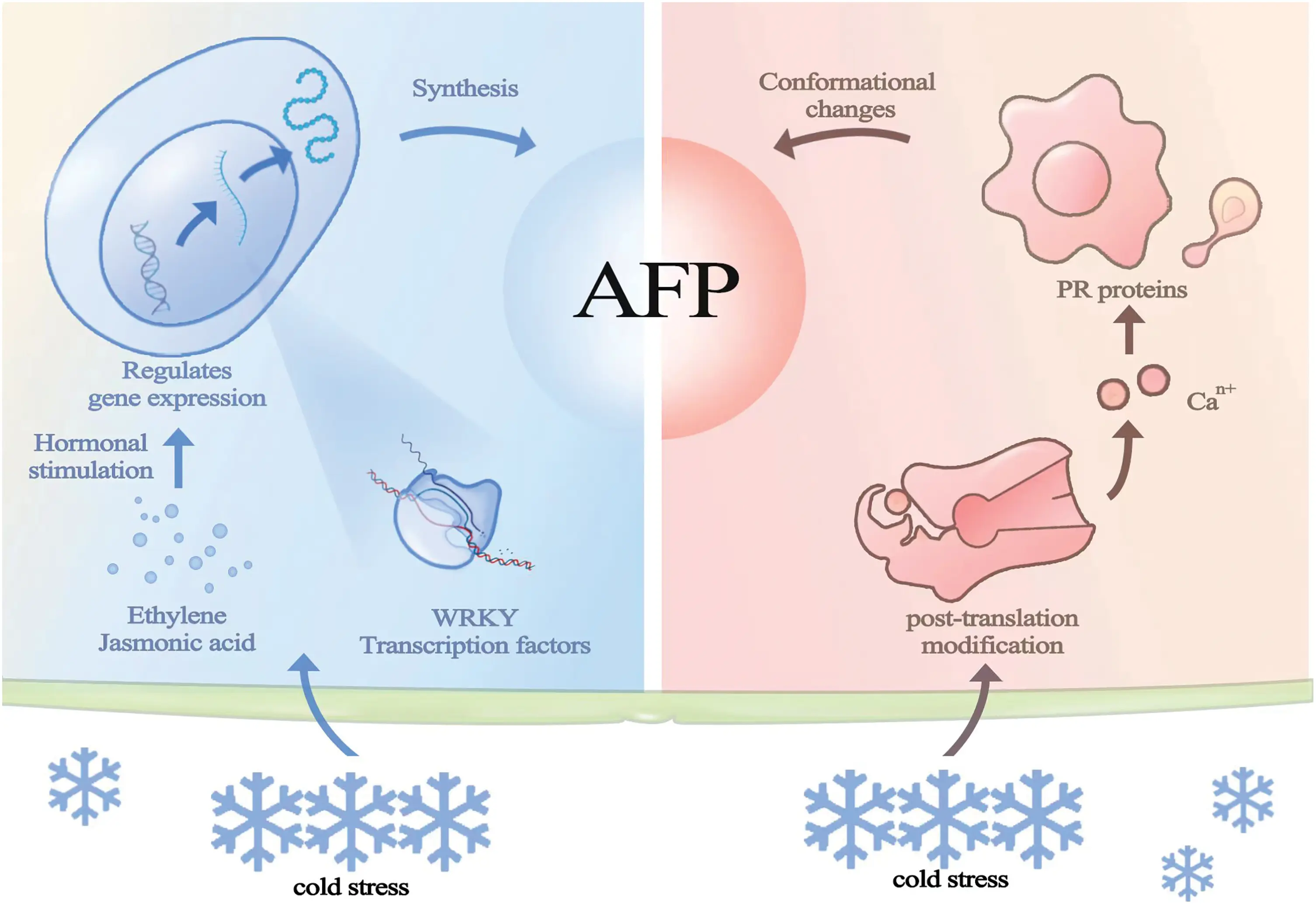
As we can see from the illustration, Freeze-Tolerance Protein has many fascinating aspects to explore.
Freeze tolerance in the wood frog Rana sylvatica is associated with unusual structural features in insulin but not in glucagon.
Storage of Protein. Not all proteins tolerate freezing at -20C. Most proteins can be kept at 4C or -70C, but the activity and stability must be checked for each new protein.
Freeze-tolerant insects can survive freezing by producing ice-nucleating and heat-shock proteins, increasing abundance of aquaporins, and accumulating cryoprotectants.