Various factors of postmortem storage and processing conditions, such as pH, ionic strength, oxidative and nitrosative stress, and heating, can affect the structure, activity, modification, and functionality of muscle proteins, thus influencing the final properties of meat and meat products.
On the one hand, the structure, activity, and modication of proteins are responsible for biochemical events during the muscle-to- meat conversion process, which regulates the quality of raw meat.
Clarifying the changes and mechanisms of muscle-to-meat conversion is of great significance in identifying protein markers for assessing meat quality. Previous studies of the biomarkers linked to meat tenderness, color and water-holding capacity are summarized.

ABSTRACT : The purpose of this study was performed as model study using four animals to investigate the correction between the changes in Differential Scanning Calorimetry thermogram of muscle proteins during storage and meat freshness.
Water-holding capacity (WHC) is the ability of meat to hold on to its own water. In fresh meat, WHC is expressed as drip or purge. As approximately 85% of the water (75g/100g) in living muscle is present in the cell, changes in the volume of myofibrils will result in changes in the WHC of meat.
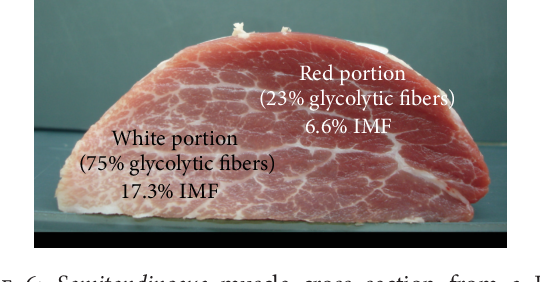
Consequently, muscle fiber composition directly influences meat quality. The distribution of these fiber types within skeletal muscle is governed by a complex network, which encompasses...