Learn about nutrition and pregnancy, including foods to avoid and foods to eat, prenatal supplements, and weight gain. Make safe, nutritious food and beverage choices during pregnancy and while breastfeeding to keep you and your baby healthy.
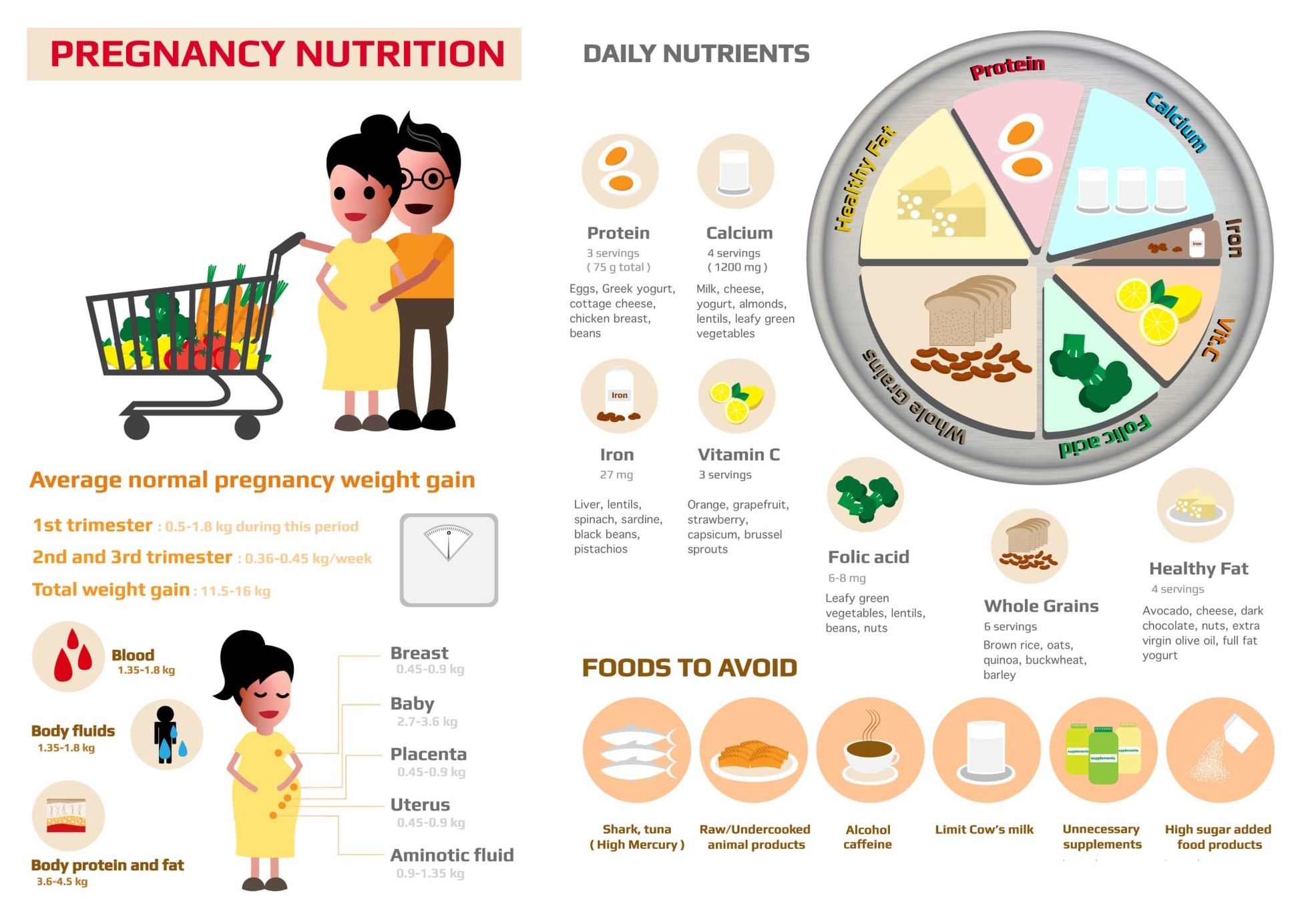
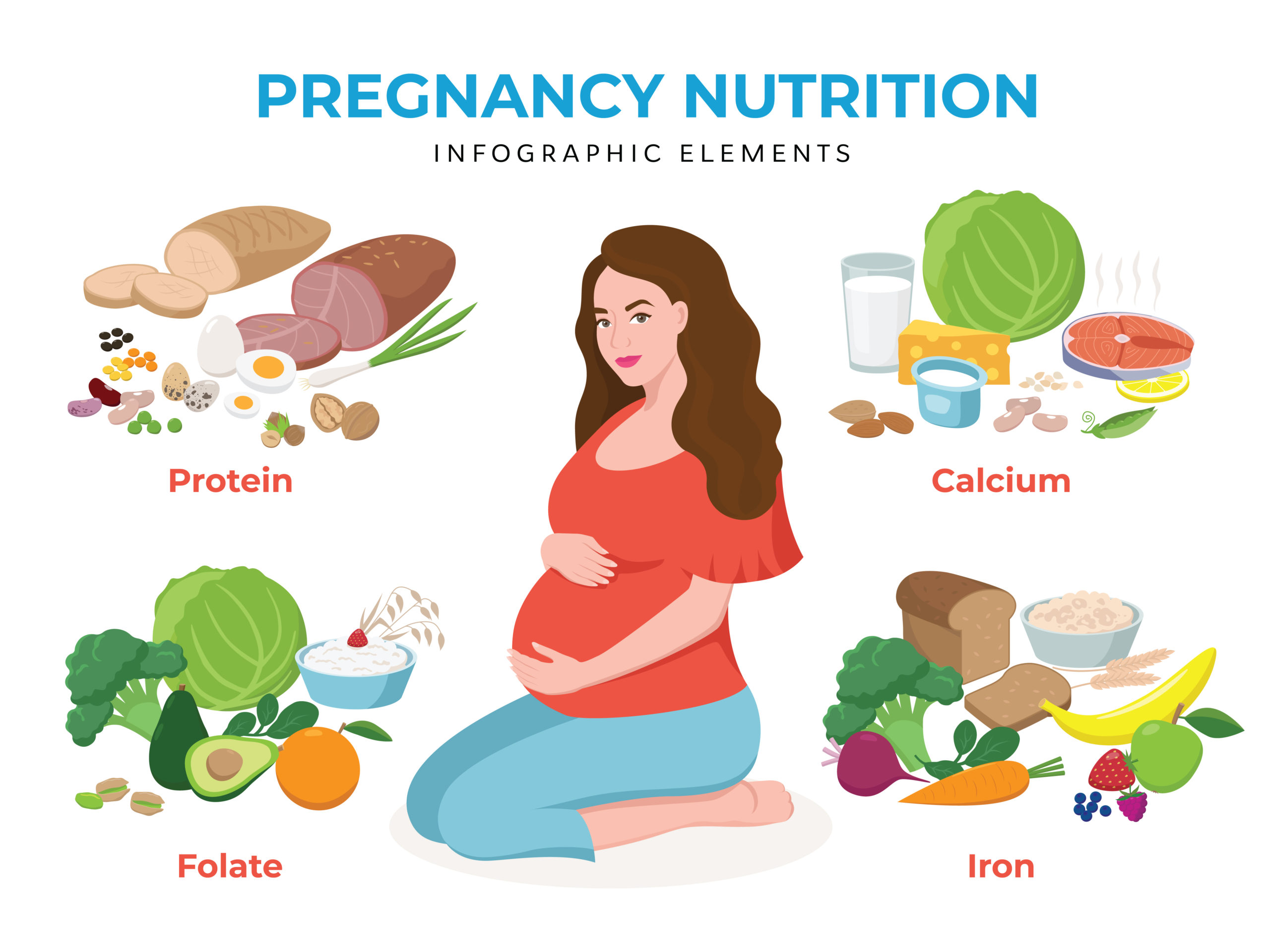
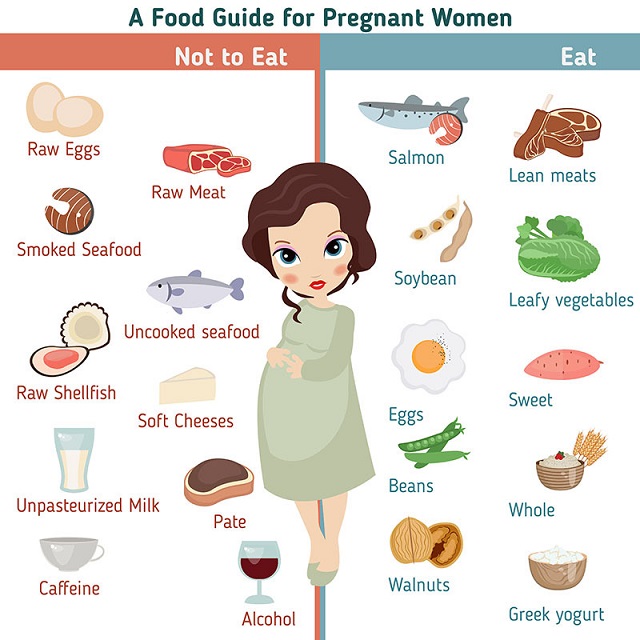
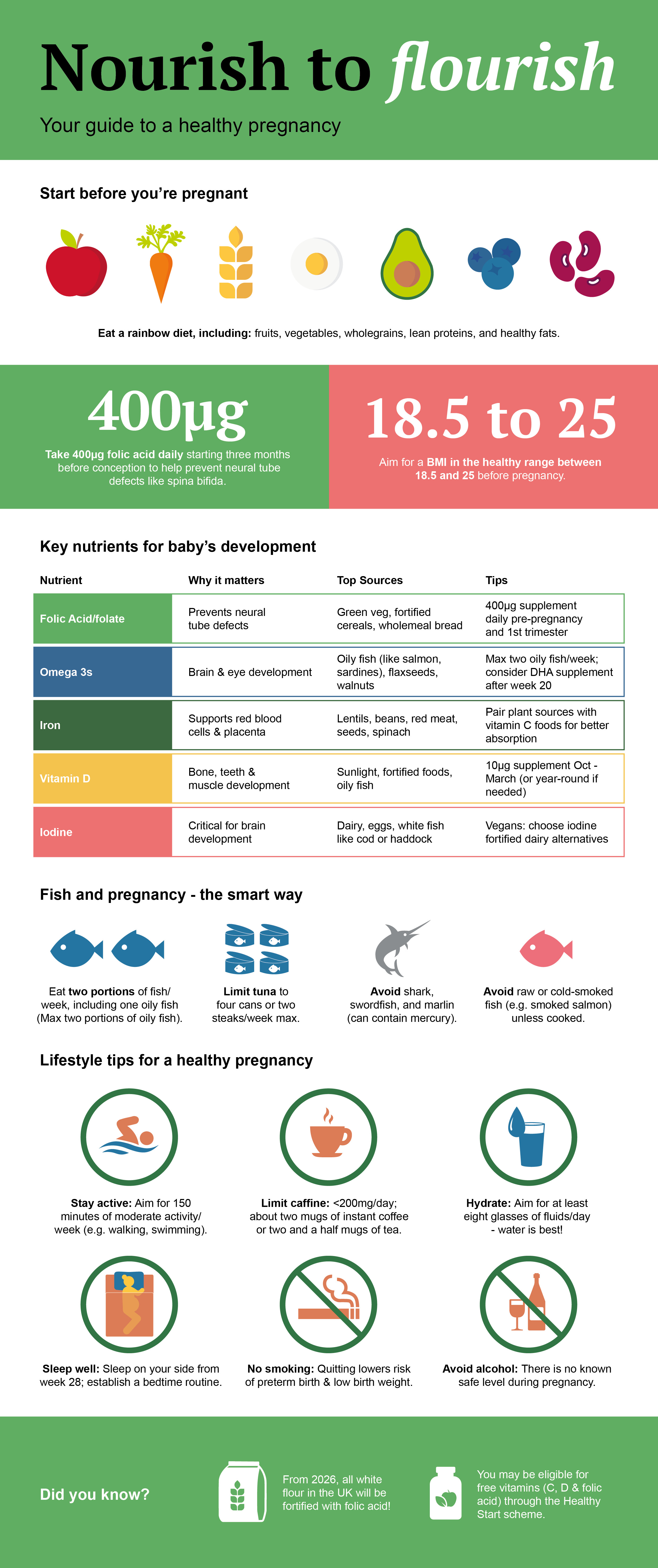
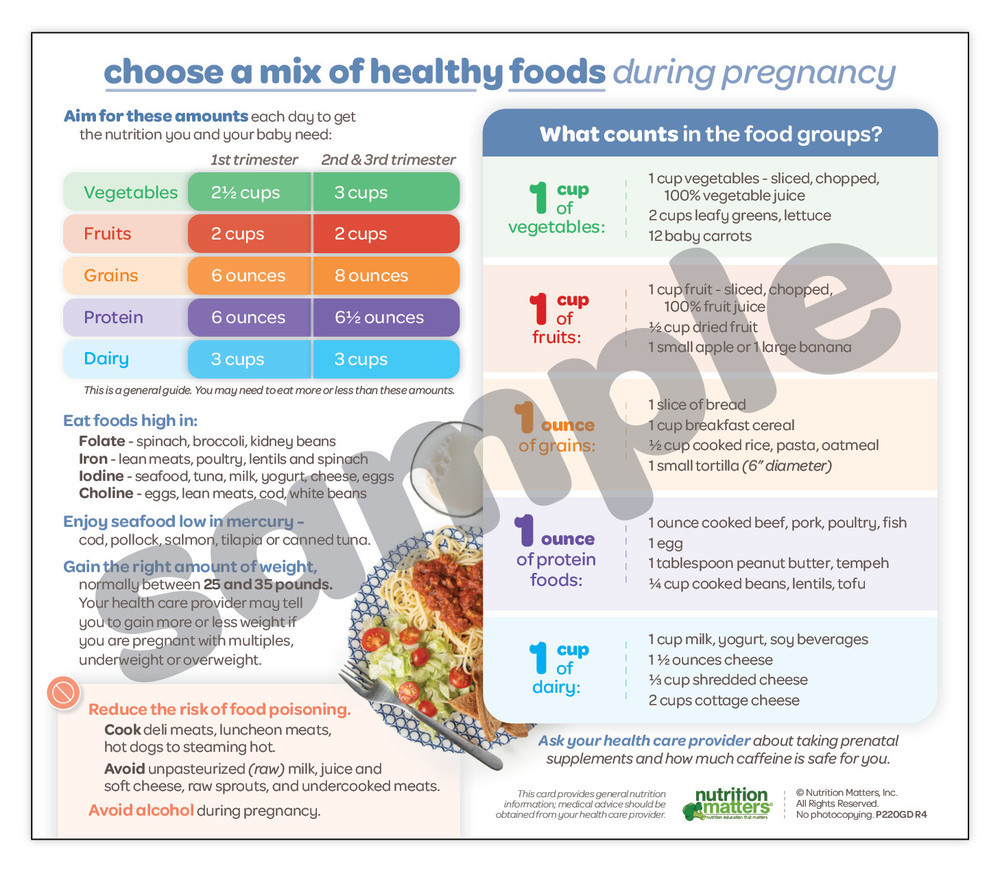
To maintain a healthy pregnancy, approximately 300 extra calories are needed each day. These calories should come from a balanced diet of protein, fruits, vegetables and whole grains. Sweets and fats should be kept to a minimum. A healthy, well-balanced diet can also help to reduce some pregnancy symptoms, such as nausea and constipation. See full list on hopkinsmedicine.org Fluid intake is also an important part of pregnancy nutrition. Follow these recommendations for fluid intake during pregnancy: 1. You can take in enough fluids by drinking several glasses of water each day, in addition to the fluids in juices and soups. Talk to your health care provider or midwife about restricting your intake of caffeine and artif... See full list on hopkinsmedicine.org The following foods are beneficial to your health and fetal development during pregnancy: 1. Vegetables: carrots, sweet potatoes, pumpkin, spinach, cooked greens, tomatoes and red sweet peppers (for vitamin A and potassium) 2. Fruits: cantaloupe, honeydew, mangoes, prunes, bananas, apricots, oranges, and red or pink grapefruit (for potassium) 3. Da... See full list on hopkinsmedicine.org Avoid eating the following foods during pregnancy: 1. Unpasteurized milk and foods made with unpasteurized milk (soft cheeses, including feta, queso blanco and fresco, Camembert, brie or blue-veined cheesesunless labeled made with pasteurized milk") 2. Hot dogs and luncheon meats (unless they are heated until steaming hot before serving) 3. Raw a... See full list on hopkinsmedicine.org Follow these general food safety guidelines when handling and cooking food: 1. Wash. Rinse all raw produce thoroughly under running tap water before eating, cutting or cooking. 2. Clean. Wash your hands, knives, countertops and cutting boards after handling and preparing uncooked foods. 3. Cook. Cook beef, pork or poultry to a safe internal tempera... See full list on hopkinsmedicine.org Most health care providers or midwives will prescribe a prenatal supplement before conception or shortly afterward to make sure that all of your nutritional needs are met. However, a prenatal supplement does not replace a healthy diet. See full list on hopkinsmedicine.org Find out how to pack your pregnancy diet with essential nutrients, including folate, iron and vitamin D. What you choose to eat when youre pregnant may influence you and your babys health now and for years to come. Pregnancy is a good time to review your nutrition. This information on healthy eating during pregnancy was adapted from materials from the Dietary Guidelines for Americans, the U.S. Department of Agriculture, and the Office on Womens Health. Healthy eating during pregnancy is critical to your babys growth and development. In order to get the nutrients you need, you must eat from a variety of food groups, including fruits and vegetables, bread and grains, protein sources and dairy products.








-1.png?width=1950&name=Essential Nutrients for Pregnancy What You Need to Know (1)-1.png "The Complete Pregnancy Nutrition Guide")