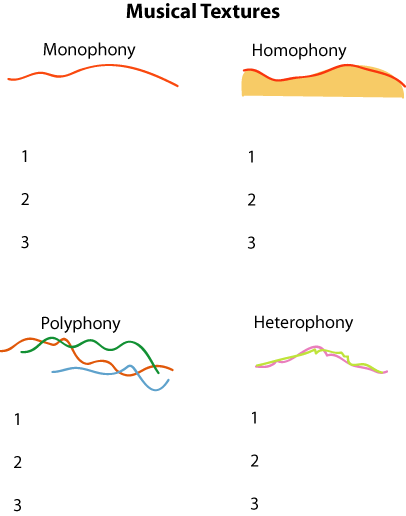
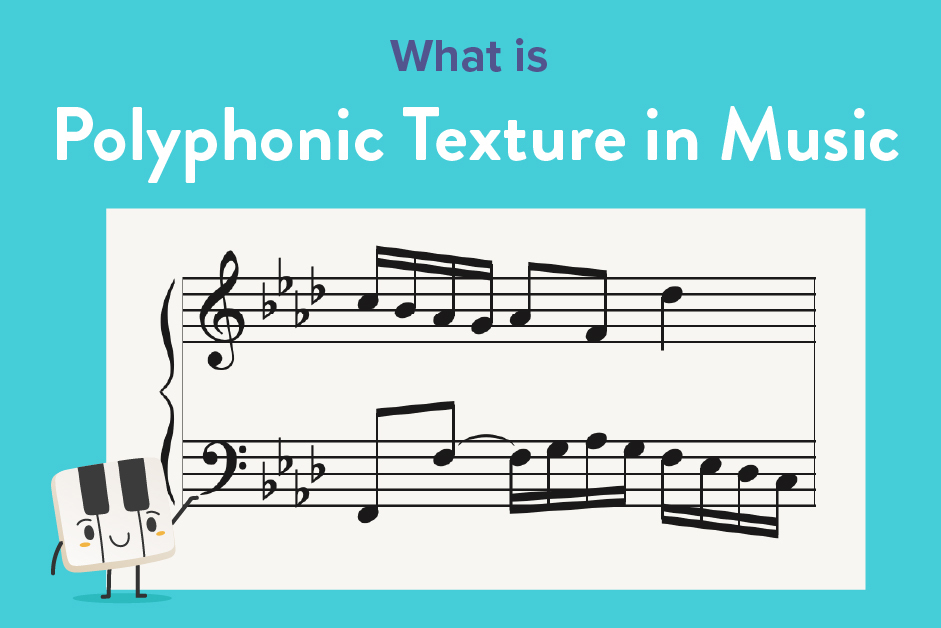
You can see on this diagram of a polyphonic texture the different parts weaving in and out as they perform distinct melodic lines that combine to create the overall sound.
Polyphonic texture, also called polyphony, is the least popular of the three main formal texturesthe other two types besting monophonic and homophonic texture. Polyphony is most commonly associated with Baroque and Renaissance music, as well as the music of the composer Johann Sebastian Bach.

Furthermore, visual representations like the one above help us fully grasp the concept of Silent Polyphonic Texture.
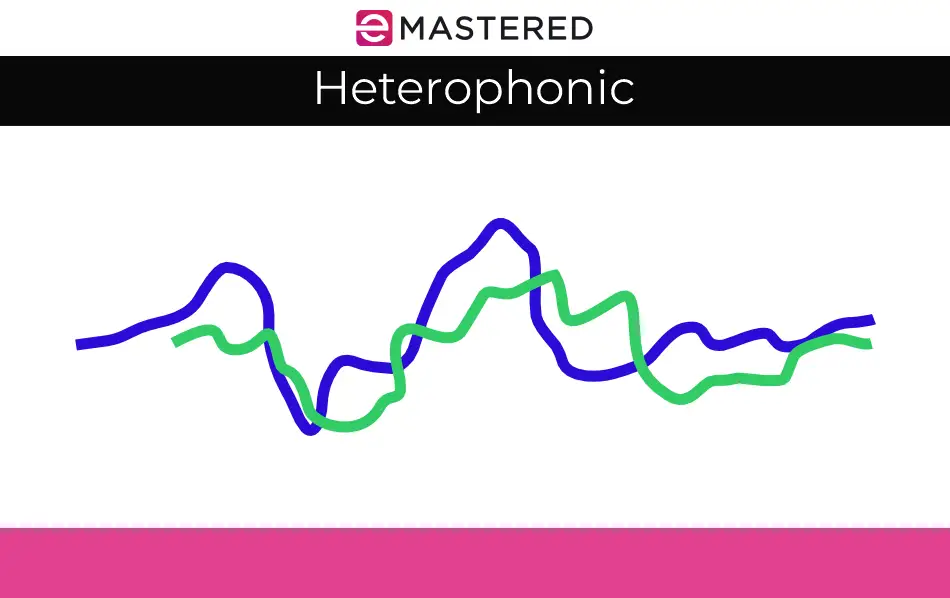
s its name implies, this texture type features chords accompanying a main song to provide harmonic support and create a certain mood or atmosphere. The chords may be simple or complex and can be played on various instruments, including piano, guitar, or strings. This exploration will unpack the concept of polyphonic texture, placing it within the broader context of monophonic, homophonic, and heterophonic textures. Well explore these concepts with illustrative examples and discuss how understanding texture enhances ones appreciation of music. The characteristic texture type of the Renaissance period is polyphonic texture. Since harmony was largely described in terms of the relationship of voices, it is natural that a tex-ture of multiple voices would be the result. Listen to classical and contemporary examples of unison, homophonic and polyphonic textures, interwoven with samples of musical notation.

This exploration will unpack the concept of polyphonic texture, placing it within the broader context of monophonic, homophonic, and heterophonic textures. Well explore these concepts with illustrative examples and discuss how understanding texture enhances ones appreciation of music.
The characteristic texture type of the Renaissance period is polyphonic texture. Since harmony was largely described in terms of the relationship of voices, it is natural that a tex-ture of multiple voices would be the result.