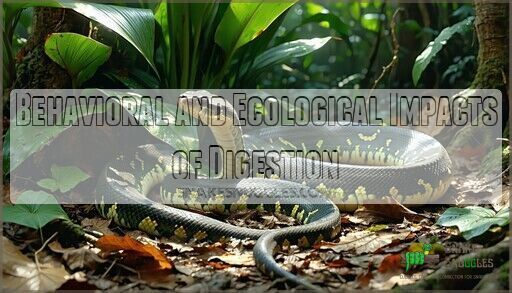
Here, our aim was to analyze the thermal sensitivity of locomotor performance and RMR in three snake species from central Mexico (Crotalus polystictus, Conopsis lineata, and Thamnophis melanogaster), highlighting how it is influenced by their distinct behavioral and ecological traits.
Without external thermal energy, a snake cannot move, hunt, or process the food it consumes. Snakes are classified as ectotherms, meaning they lack the internal metabolic mechanisms that mammals and birds use to maintain a constant, high body temperature.
Thermal homeostasis is a fundamental process in mammals, which allows the maintenance of a constant internal body temperature to ensure an efficient function of cells despite changes in ambient temperature.

Such details provide a deeper understanding and appreciation for The Impact Of Food On Snake Thermal Homeostasis.
Why thermal homeostasis can be tricky to learn. Three main reasons make thermal homeostasis difficult for students to understand. 1. It feels abstract. Thermal homeostasis consists of several abstract concepts, such as temperature, heat, thermoregulation, and evaporation.
Snakes may or may not come out when it rains, based on a number of things. Some of these things are the weather, the temperature, the environment, and how much food and water are available.Snake behavior under rain depends on their thermal homeostasis.